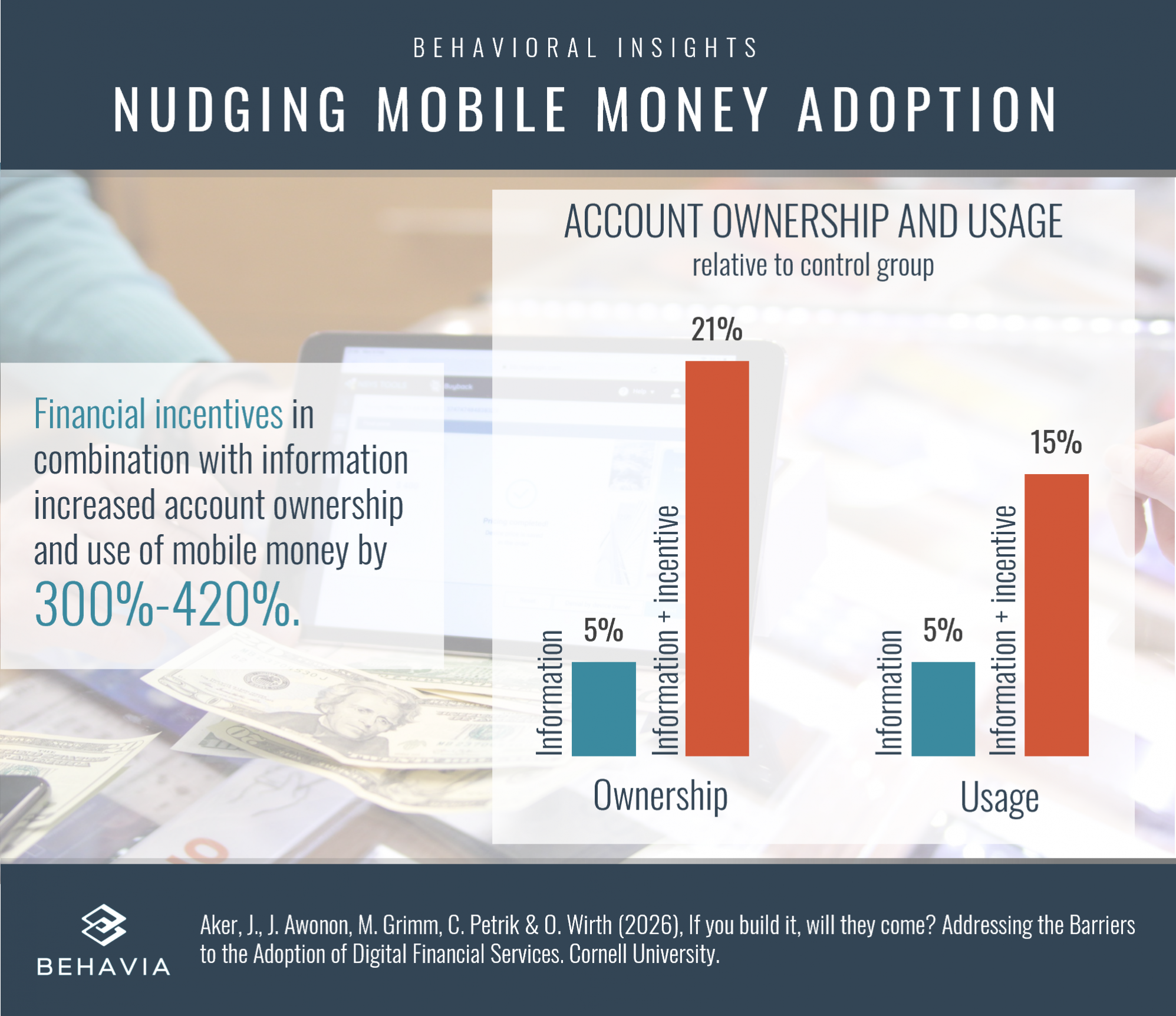
Nudging mobile money adoption
A $4.50 Nudge That Changed How Rural Niger Sends Money Home. What a randomized experiment in West Africa tells us about breaking the barriers to mobile money adoption. An opinion piece by Prof. Dr. Michael Grimm.
Behavioral Public Policy and Economics GmbH
A $4.50 Nudge That Changed How Rural Niger Sends Money Home. What a randomized experiment in West Africa tells us about breaking the barriers to mobile money adoption. An opinion piece by Prof. Dr. Michael Grimm.
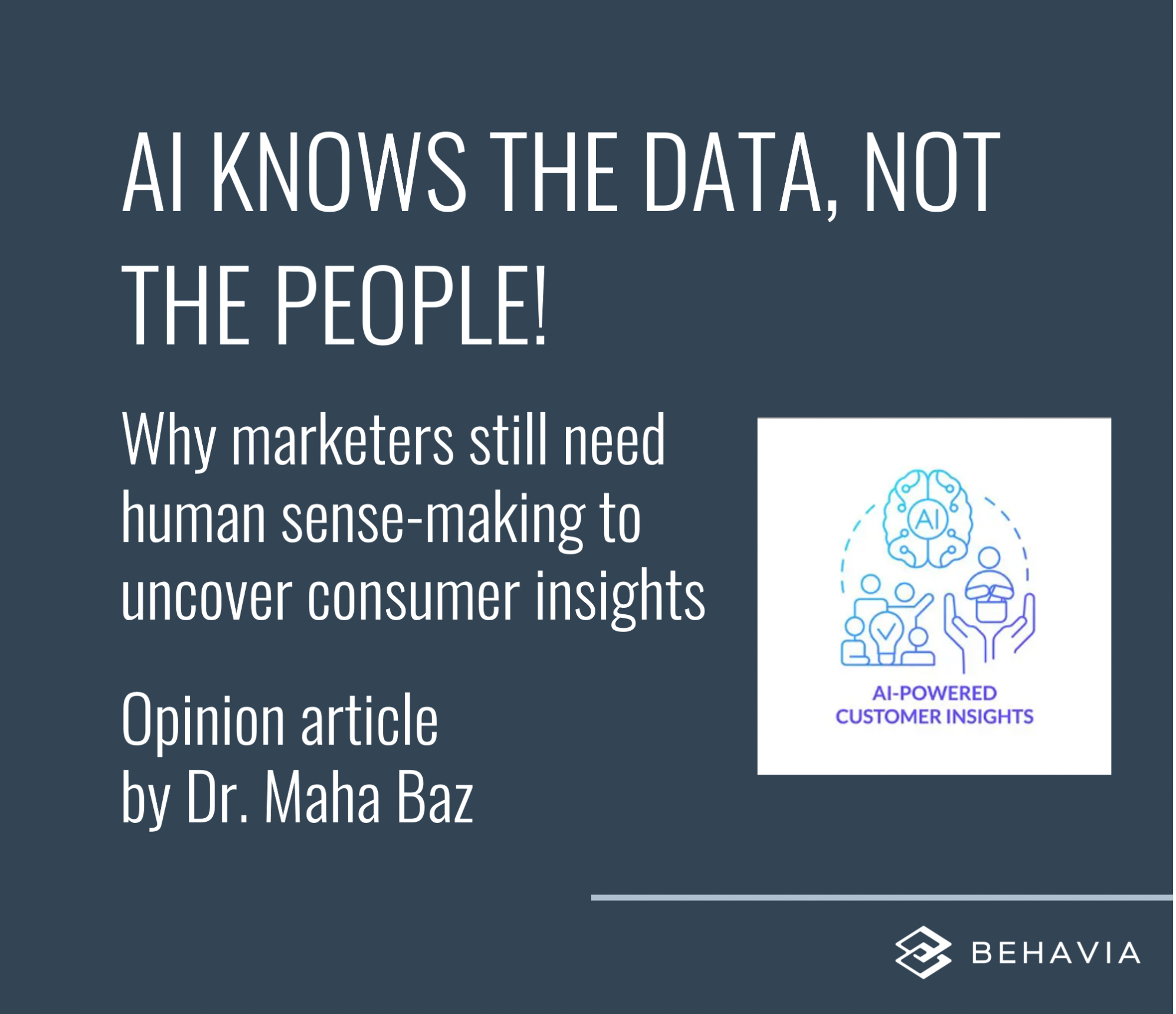
Artificial intelligence has become the rising promise of consumer insight. It analyses and breaks down immense amounts of behavioral data, detects patterns (that probably humans would miss), and powers a new generation of hyper-personalized experiences and visibility into customer preferences, purchase patterns, and social interactions.
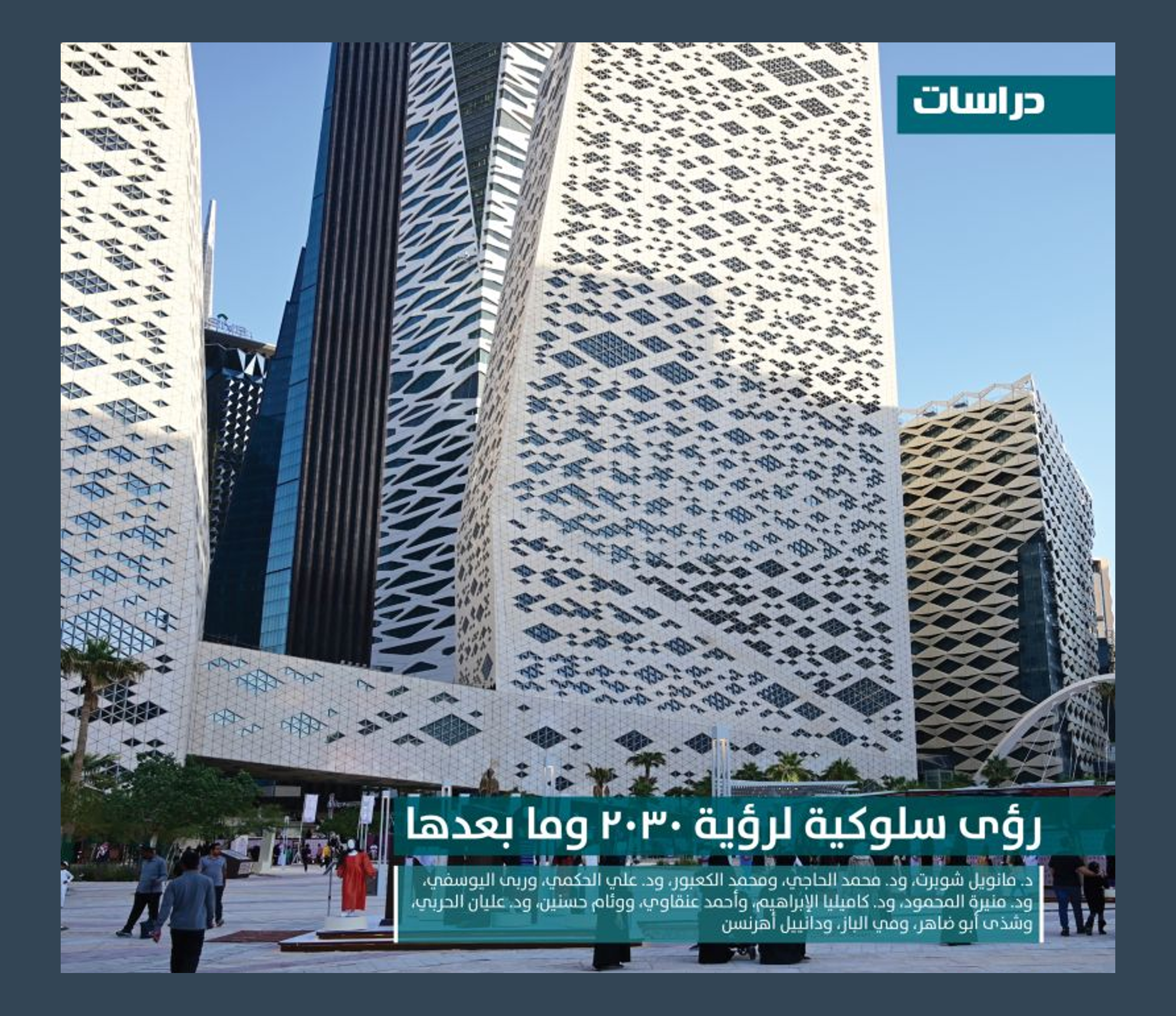
The community paper on “Behavioral Insights for Vision 2030 and beyond” is now also available in Arabic.
Over the last couple of months, we attended several conferences in Behavioral Public Policy including the IAREP in Tartu, BX2025 in Abu Dhabi, and this week the IBPPC in London.
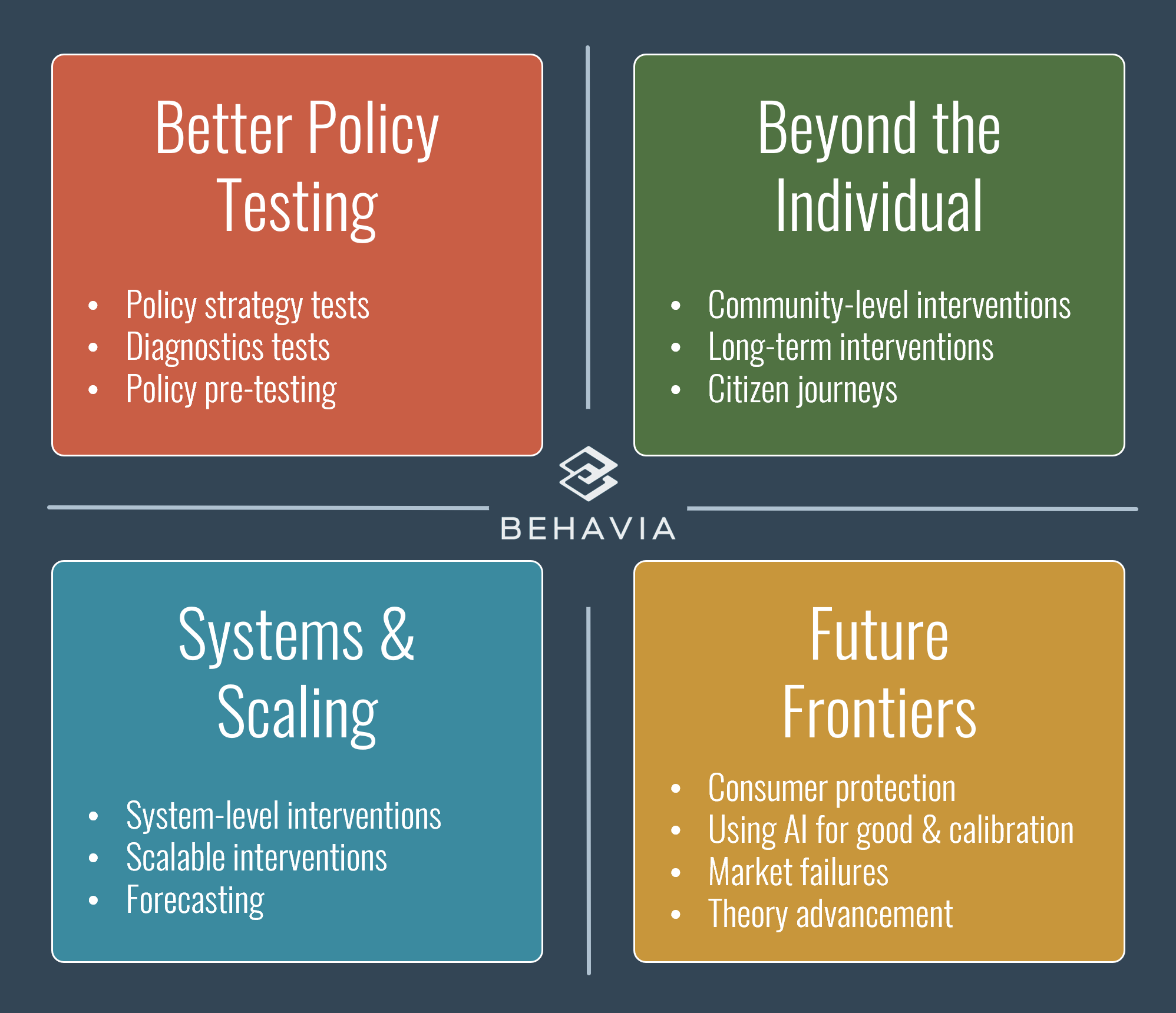
Each of these events was inspiring and we enjoyed learning from our peers and colleagues about the latest advances in our field. At the same time, we sometimes found ourselves a bit surprised by the direction in which discussions are heading. In particular, our perspective on the future of BPP seems to differ in several ways from the topics currently dominating the conversations.
Marketing in Saudi Arabia is evolving at an unprecedented pace, shaped by Vision 2030 reforms, a booming digital economy, and a generational shift in consumer mindset. Among this transformation, one of the most influential drivers of consumer behavior remains social norms. These unwritten rules, grounded in shared expectations and collective behavior, play a central role in how Saudis choose what to wear, eat, drive, and buy.
Over the past decade, Behavioral Insights (BI) have become a powerful tool for enhancing policy effectiveness worldwide. In Saudi Arabia, an active BI community has been leveraging these insights across various policy sectors. A new paper published by a group of leading experts in the Saudi BI community – among them our Managing Director Dr. Manuel Schubert – discusses how Vision 2030 can further benefit from the systematic use of BI, particularly in education and human capability development.
In the world of consulting, success is often measured by how long a firm stays embedded in a client’s operations. The longer the engagement, the more valuable the relationship, so the logic goes. But what if real impact lies in doing the opposite? What if the most transformative consulting work is the kind that ends?
Modern remote work and large collaborative online projects are both a blessing and a challenge. On one hand, they enable flexible working arrangements and bring together global expertise. On the other hand, the physical distance among team members makes us more susceptible to behavioral biases.
In competitive markets, understanding what customers truly want is a very crucial factor in advertising. As a behavioral consultant with a background in strategic marketing and communication, I’ve come to deeply appreciate this fact. It’s not just about knowing who your target audience is.
The 27th of November 2024 marked a milestone for Riyadh as the Riyadh Metro opened its first lanes, starting a new era of public transportation in the city. The metro has the potential to transform urban mobility, reduce congestion, and enhance the quality of life for residents.