Behavioral Economics and the Seven Deadly Sins: new student papers

Behavioral Insights Germany and Saudi Arabia

As part of the 7th “Behavioral Economics and the Seven Deadly Sins”, the Chair of Economic Theory has published a new wave of student papers.

Topics address behavioral insights on hand hygiene, slacktivism, moral cleansing, or prosociality.

Interested? Then check out the papers on https://www.wiwi.uni-passau.de/wirtschaftstheorie/forschung/studentische-diskussionspapiere/ (just scroll down to the bottom of the page…).

Happy reading!

New article on Behavioral Insights in Arabic language

Behavioral Insights Germany and Saudi Arabia

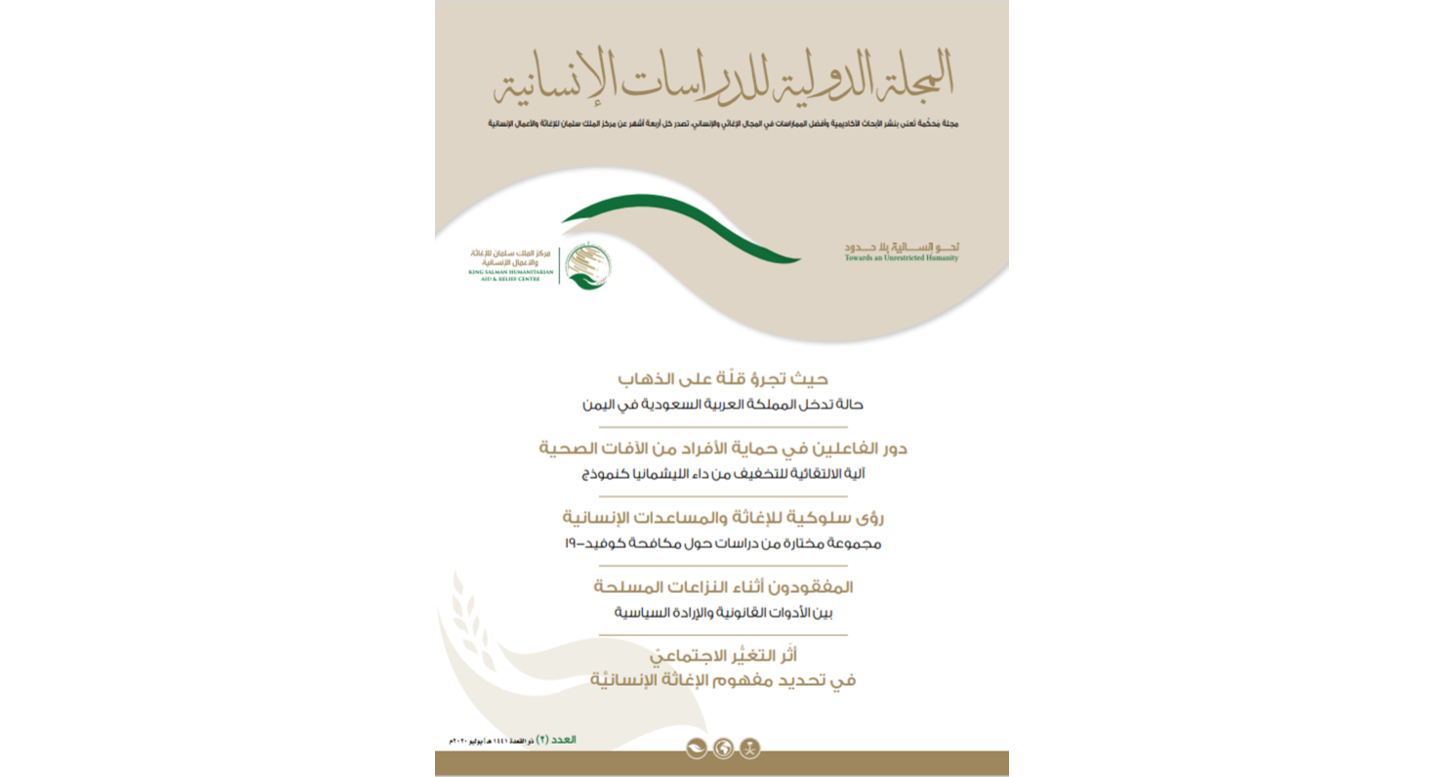
We are delighted to announce that our article “Behavioral Insights for Humanitarian Aid and Relief: A selection of Case Studies to combat COVID-19” has been published in the International Journal of Humanitarian Studies, the academic journal of the King Salman Humanitarian Aid & Relief Centre.

In the article, our directors Dr. Manuel Schubert and Dr. Julia Stauf discuss how behavioral insights can be applied in humanitarian aid and relief. In light of the COVID-19 crisis, they present a selection of case studies that could help to improve social distancing, hand washing and information agency.[i] The article aims to serve as a source of inspiration and encouragement for practitioners to give behavioral insights interventions a try in humanitarian work.

The complete issue can be downloaded here.

[i] The case studies are based on articles and papers available till May 2020.

Next generation of online experimentation

Behavioral Insights Germany and Saudi Arabia

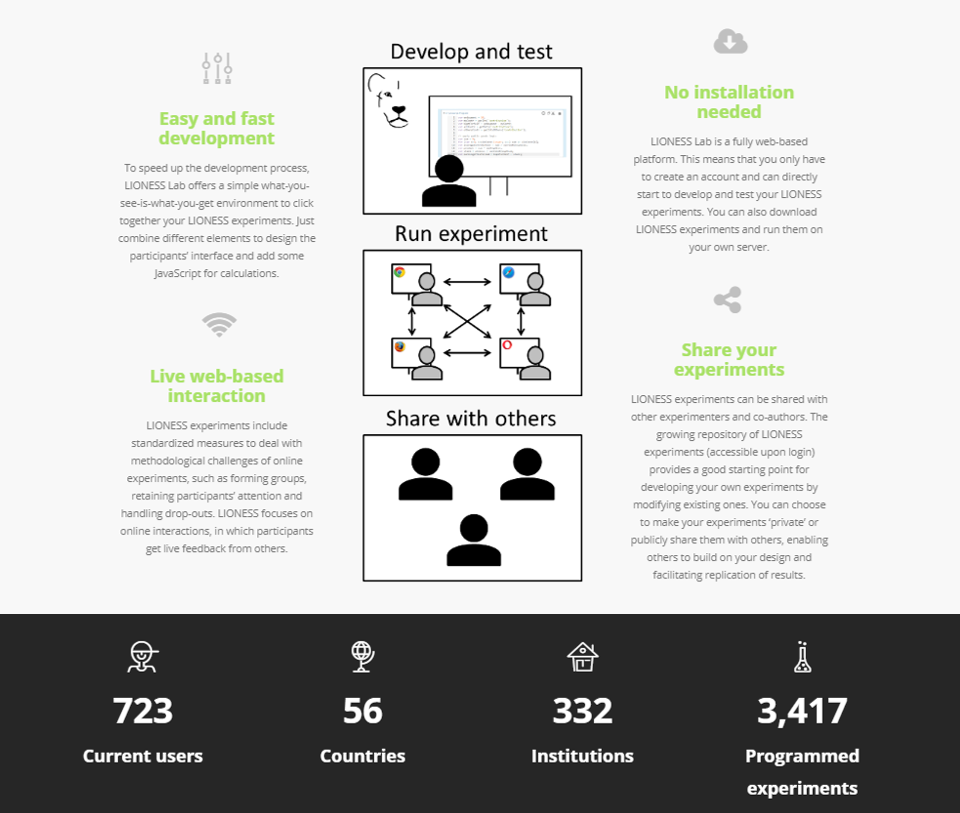
Online experimentation is an important tool in behavioral economic research. Our affiliate Marcus Giamattei and his colleagues just published a paper on LIONESS Lab, a new platform for online experiments.

The platform allows researchers to develop, test, run, and share interactive experiments – covering the full range of behavioral economics topics. The platform is a joint project of the University of Nottingham, the University of Passau and the Max Planck Institute for Human Development Berlin. It is currently used by more than 300 institutions in over 50 countries.

Learn more about LIONESS Lab on https://lioness-lab.org/

Again top rank for Behavia’s academic incubator

22nd place among the best young universities worldwide and 2nd place in Germany

Behavia‘s academic incubator and alma mater the University of Passau has secured another top result in the Times Higher Education (THE) Ranking for 2020. Among the universities aged 50 or younger, Passau came in 22nd (out of 414) and 2nd among all German universities.

Find more information in the official press release (in German language).

New partnership with i-be innovation lab

Behavioral Insights Germany and Saudi ArabiaWe are very happy to announce our new partnership with i-be, a leading incubator and innovation lab in Saudi Arabia.

Together, we want to contribute to the creation of an innovative and creative entrepreneurial ecosystem in the Kingdom and apply behavioral economic insights to help startups, corporate and social innovators.

Check out i-be’s website and follow them on Twitter.

Read More

Call for support

Call for supportCall for support: please participate in a 20 minutes survey on COVID-19 experiences and behaviors!

A well-established group of colleagues and scientists is conducting a global survey to develop a more accurate understanding of the Covid19 pandemic. Please help them and join us in answering and circulating this survey.

The answers will help to inform public health responses, which can save lives. Here you will find the survey.

Asbar World Forum “Towards the Future”

Behavioral Insights and Public Policy

Impressions from a fantastic and super inspiring Asbar World Forum “Towards the Future” held under the patronage of HRH Prince Faisal bin Bandar, Governor of Riyadh Region. More than 100 speakers from 15 countries.